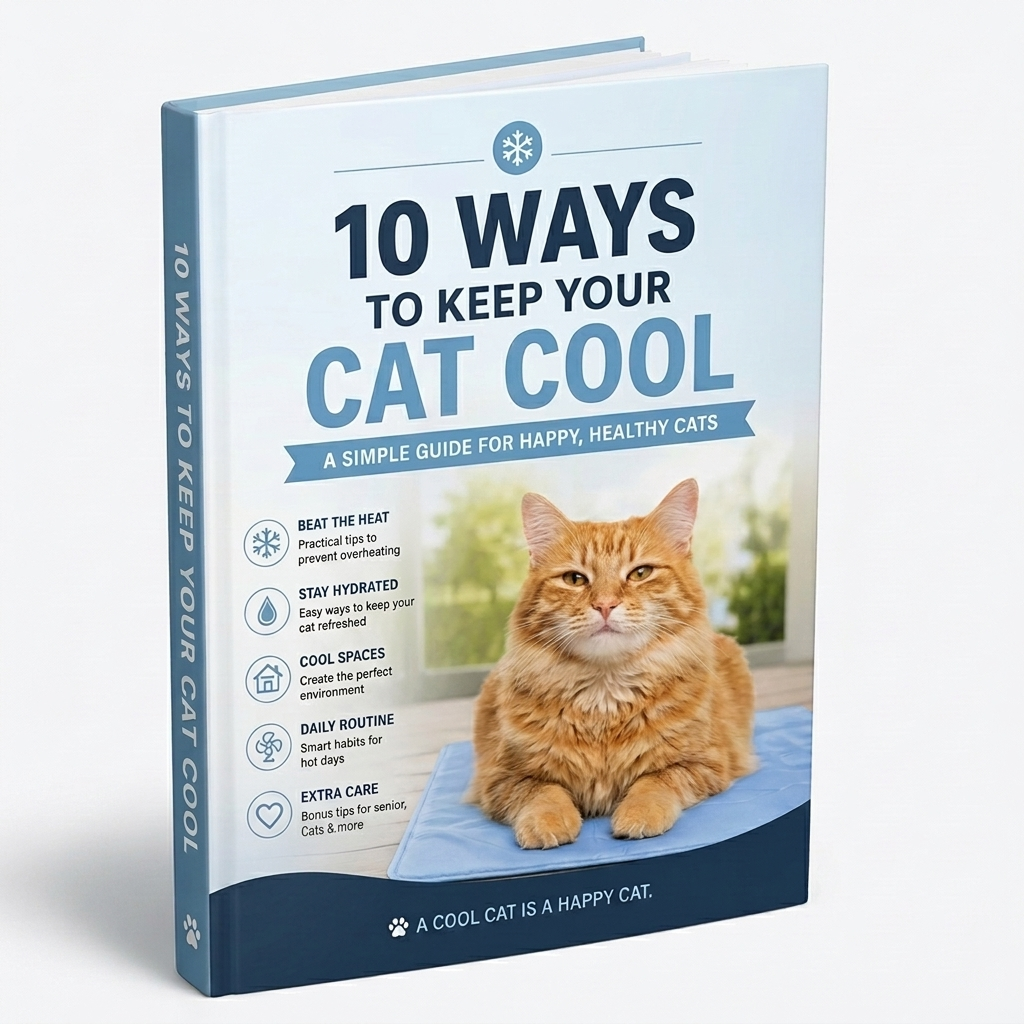
How to Prevent Your Cat From Overheating (Digital Guide)
How to Prevent Your Cat From Overheating (Digital Guide)
10 Ways to Keep Your Cat Cool
A Practical Guide to Preventing Overheating and Supporting Your Cat’s Comfort
Introduction
Cats are generally more heat-tolerant than dogs, but they are not immune to overheating. In warm environments, especially indoors without proper airflow, cats can experience heat stress that affects their comfort and overall health.
Unlike humans, cats rely on limited sweating (through paw pads) and grooming behavior to regulate body temperature. When environmental heat exceeds their ability to self-regulate, intervention becomes necessary.
This guide outlines simple, practical steps to help maintain a safe and comfortable environment for your cat during warmer conditions.
Understanding Heat Risk in Cats
Cats manage heat through:
• Grooming (saliva evaporation helps cooling)
• Limited sweating through paw pads
• Seeking cool, shaded surfaces
However, these mechanisms have limits.
Early signs of overheating include:
• Increased grooming or restlessness
• Panting (uncommon in cats and a warning sign)
• Lethargy
• Warm ears and paws
Advanced signs require immediate attention:
• Drooling
• Vomiting
• Disorientation
• Rapid breathing
Cats tend to hide discomfort, so subtle behavioral changes should not be ignored.
1. Ensure Constant Access to Fresh Water
Hydration is essential for temperature regulation.
• Place multiple water bowls around your home
• Refresh water frequently to keep it cool
• Use wider bowls to avoid whisker fatigue
Some cats drink more when water is easily accessible and clean.
2. Create Cool Resting Areas
Cats naturally gravitate toward cooler surfaces.
• Provide access to tile, marble, or shaded flooring
• Keep resting areas away from direct sunlight
• Add cooling mats or lightly damp cloth surfaces
The objective is to give your cat options for self-regulation.
3. Maintain Indoor Airflow
Indoor heat buildup can be significant, especially in enclosed spaces.
• Use fans or air conditioning where possible
• Keep windows slightly open for ventilation (with safety measures)
• Close curtains during peak sunlight hours
Air circulation helps reduce stagnant heat.
4. Limit Direct Sun Exposure
Cats often enjoy sunbathing, but prolonged exposure increases risk.
• Monitor time spent in direct sunlight
• Block intense sunlight during midday hours
• Provide shaded alternatives near windows
Controlled exposure is safer than unrestricted access.
5. Use Cooling Surfaces and Materials
Support passive cooling through surfaces.
• Cooling mats help regulate body temperature
• Elevated bedding improves airflow underneath
• Smooth surfaces retain less heat than fabric-heavy bedding
Cats will choose cooler areas if available.
6. Provide Light Grooming Support
A well-maintained coat supports temperature regulation.
• Brush regularly to remove excess fur
• Reduce matting, which traps heat
• Avoid shaving unless recommended by a professional
Coat maintenance improves natural airflow.
7. Offer Hydrating Food Options
Diet can support hydration levels.
• Include wet food in meals when possible
• Add small amounts of water to dry food
• Offer safe, water-rich treats in moderation
Cats often have low thirst drive, so indirect hydration helps.
8. Use Gentle Cooling Methods
If your cat appears warm, mild cooling can help.
• Use a damp cloth on paws or ears
• Provide a cool (not cold) resting surface
• Avoid sudden or extreme temperature changes
Cats are sensitive to abrupt environmental shifts.
9. Reduce Physical Activity During Peak Heat
Cats naturally adjust activity, but additional care helps.
• Encourage play during cooler hours (morning or evening)
• Avoid stimulating intense activity in midday heat
• Allow uninterrupted rest during hotter periods
Energy conservation supports temperature stability.
10. Monitor Behavior and Environment Closely
Observation is the most effective prevention tool.
• Watch for subtle behavioral changes
• Check preferred resting spots (cats seek cooler zones)
• Adjust environment based on temperature changes
Cats often signal discomfort indirectly.
Cats at Higher Risk
Certain cats require closer attention in warm conditions:
• Kittens and senior cats
• Overweight cats
• Long-haired breeds
• Cats with underlying health conditions
These cats may struggle more with temperature regulation.
Emergency Response: Suspected Overheating
If your cat shows signs of heat stress:
• Move to a cool, shaded, and ventilated area
• Offer small amounts of fresh water
• Apply a cool (not cold) damp cloth to paws and body
• Contact a veterinarian immediately
Do not delay treatment if symptoms escalate.
Conclusion
Keeping your cat cool is not about one solution, but a combination of small, consistent adjustments. Environment, hydration, grooming, and observation all play a role in preventing heat-related issues.
With proper care, you can maintain your cat’s comfort and well-being even in warmer conditions.
About This Guide
This guide is provided to support practical, informed pet care. Thoughtful adjustments to your cat’s environment and routine can significantly improve comfort and reduce risk during periods of heat.